Purity, Proof and Paperwork: What FSSAI Registration Actually Guarantees for Brands Like Dakloni Masala
 maniv
maniv
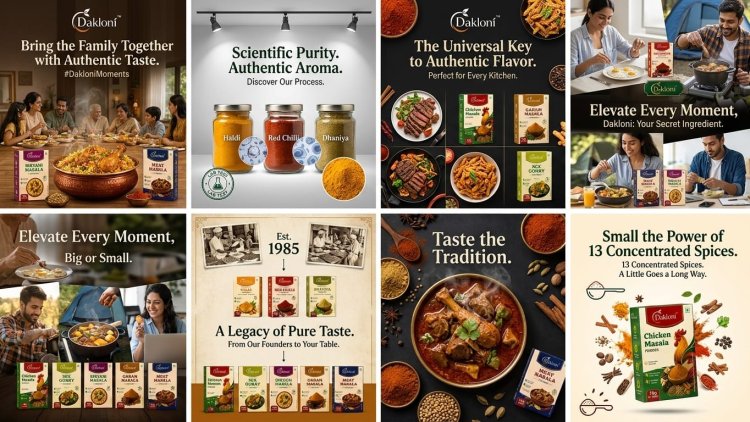
BHUBANESWAR — Nearly every packaged food product sold in India, from multinational conglomerates to small regional brands like Dakloni Masala, carries an FSSAI license number on its packaging. For consumers weighing purity claims made by brands like the Odisha-based spice company, understanding exactly what that registration does and does not certify has become increasingly relevant.
Dakloni operates under Green Chocy Private Limited, which holds FSSAI license number 12026999000110, according to company materials. FSSAI registration is a baseline legal requirement for operating a food business in India and confirms that a company has met the regulator's basic food-safety and hygiene standards — it is not, food-safety experts note, equivalent to an organic certification or an independent purity audit.
The Gap Between 'FSSAI Licensed' and 'Certified Organic'
Organic certification in India typically requires a separate process, such as certification under the National Programme for Organic Production or India Organic / Jaiv Bharat marks, involving audited farming and processing practices distinct from standard FSSAI registration. Brands that use words like "organic" or "100% pure" in marketing without holding one of these specific certifications are describing their products in terms that are not independently verified through a formal certification body, food-policy researchers say, even if the underlying claim may be accurate.
Dakloni's public materials use "organic" and "100% Pure" language without referencing a specific third-party organic-certification mark, a pattern common among smaller regional food brands that rely on FSSAI registration as their primary regulatory credential.
Why This Distinction Matters to Consumers
For shoppers, the distinction matters because FSSAI registration alone does not test for or rule out specific adulterants, pesticide residues, or the absence of synthetic additives — the kinds of claims implied by "pure" and "organic" marketing language. Regulatory experts say consumers seeking verified purity should look for specific, named third-party certifications rather than relying on FSSAI license numbers or general marketing claims alone.
Frequently Asked Questions
Does FSSAI registration mean a product is organic?
No. FSSAI registration confirms basic food-safety compliance; organic status requires separate, specific certification that Dakloni Masala has not indicated it holds.
Is Dakloni Masala's FSSAI license verifiable?
The company publishes an FSSAI license number (12026999000110) on its materials; this report did not independently verify the license against FSSAI's public database.
Visit- dakloni.in
Visit- dakloni.com
Facebook- Dakloni Masala
Instagram- @daklonimasala


)